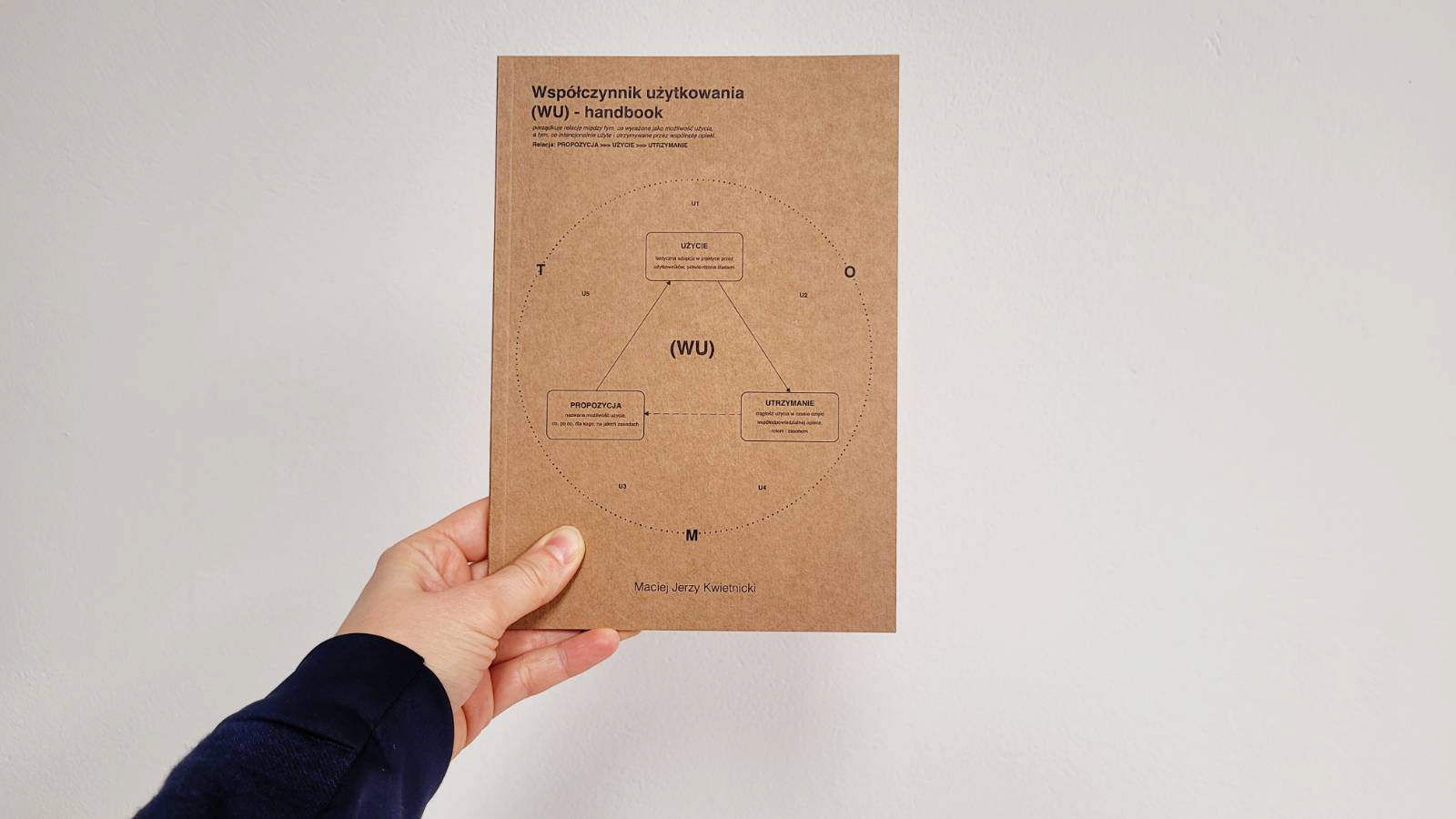
A gdyby o wartości działania nie decydowało to, jak wygląda, lecz to, co po sobie zostawia?
Współczynnik Użytkowania (WU) wyrasta z niezgody na projekty, które kończą się wraz z finisażem, zostawiając po sobie głównie dokumentację, deklaracje i dobre intencje. To propozycja patrzenia na sztukę nie jak na zamknięty obiekt, lecz jak na proces: od propozycji, przez użycie, po utrzymanie. Nie pyta więc wyłącznie: „czy to jest sztuka?”, ale także: komu to służy, kto z tego korzysta, co dzięki temu realnie się zmienia i czy ta zmiana ma szansę trwać.
WU przesuwa uwagę z gestu autora na życie projektu w świecie — wśród ludzi, instytucji, miejsc, a także wobec tego, co więcej-niż-ludzkie. Domaga się uważności, współodpowiedzialności i odwagi, by sprawdzać nie tylko potencjał działania, ale też jego koszty, ślady uboczne i sens dalszego istnienia.
Ta wystawa nie daje gotowych odpowiedzi. Raczej podsuwa narzędzie i otwiera pole tarcia. Co naprawdę zasługuje dziś na uwagę, czas i energię? Kiedy działanie jest jeszcze potrzebne, a kiedy staje się tylko podtrzymywaniem własnej widzialności? Czy sztuka może być użyteczna, nie tracąc swojej siły? A może właśnie dopiero wtedy zaczyna działać naprawdę?
Całość na: www.wpolczynnikuzytkowania.pl
What if the value of an action were determined not by how it looks, but by what it leaves behind?
The Usage Coefficient (UC) emerges from a refusal of projects that end with the exhibition’s closing, leaving behind little more than documentation, declarations, and good intentions. It proposes looking at art not as a closed object but as a process: from Proposal through Use to Maintenance. It therefore asks not only, “Is this art?”, but also: who does it serve, who actually uses it, what does it actually change, and whether that change has a chance to last.
UC shifts attention away from the author’s gesture and toward the life of the project in the world — among people, institutions, places, and also in relation to the more-than-human. It calls for attentiveness, shared responsibility, and the courage to examine not only a project’s potential to act, but also its costs, side effects, and whether its continued existence still makes sense.
This exhibition does not offer ready-made answers. Rather, it introduces a tool and opens up a field of friction. What truly deserves attention, time, and energy today? When is an action still needed, and when does it become merely a way of sustaining its own visibility? Can art be useful without losing its force? Or is that precisely when it begins to act for real?
Full text: www.wspolczynnikuzytkowania.pl