The Dew Point/ instalacja site-specific 2026
Pawilon Polana / W788 / Grabowo
/PL
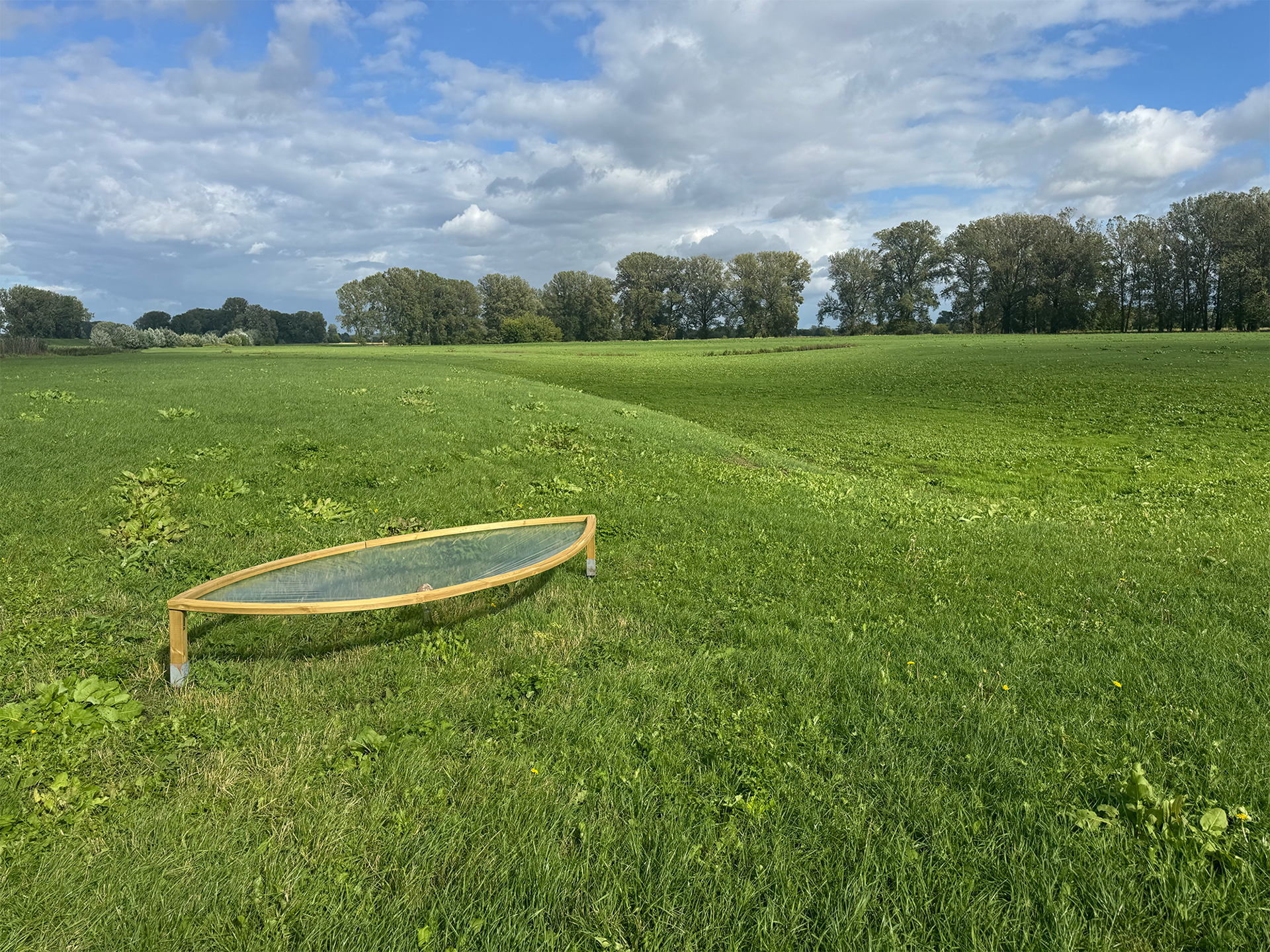
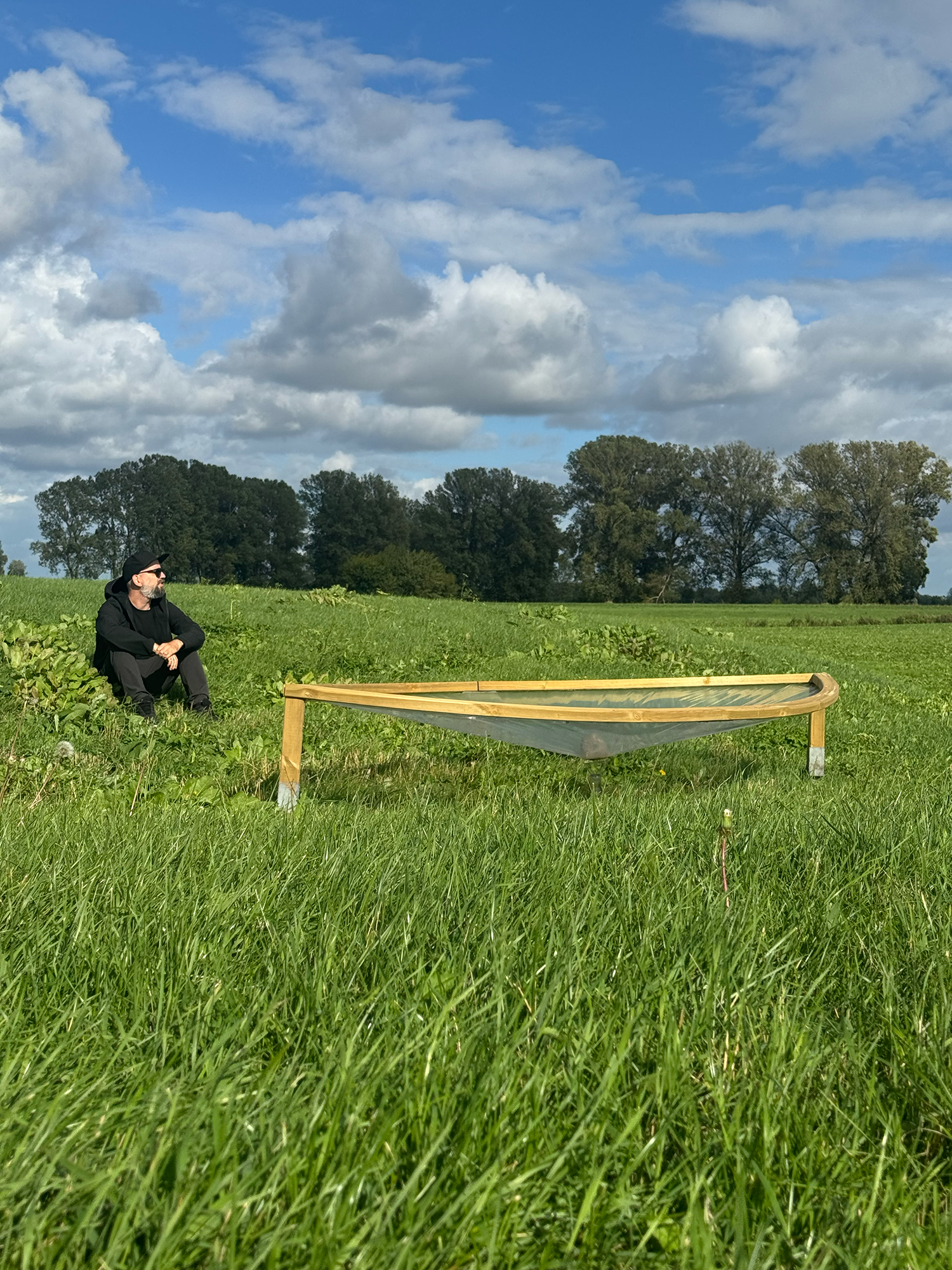
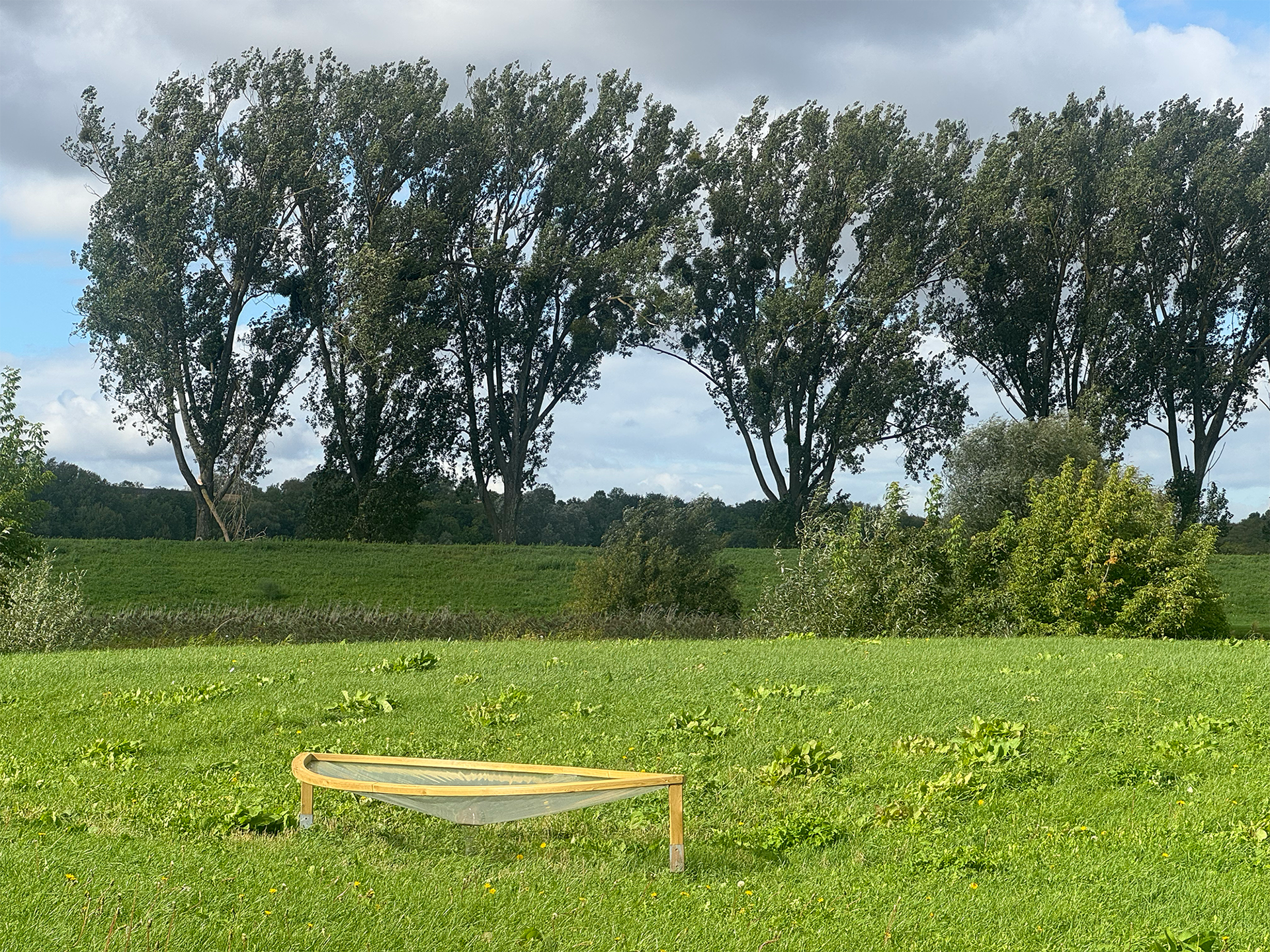
Punkt rosy to łapacz rosy w kształcie mandorli — obiekt funkcjonujący jednocześnie jako rzeźba, narzędzie i proste urządzenie do pozyskiwania wody z atmosfery. Wykorzystuje zjawisko kondensacji: wilgoć zawarta w powietrzu osiada na ochładzającej się powierzchni folii i stopniowo przekształca się w wodę.
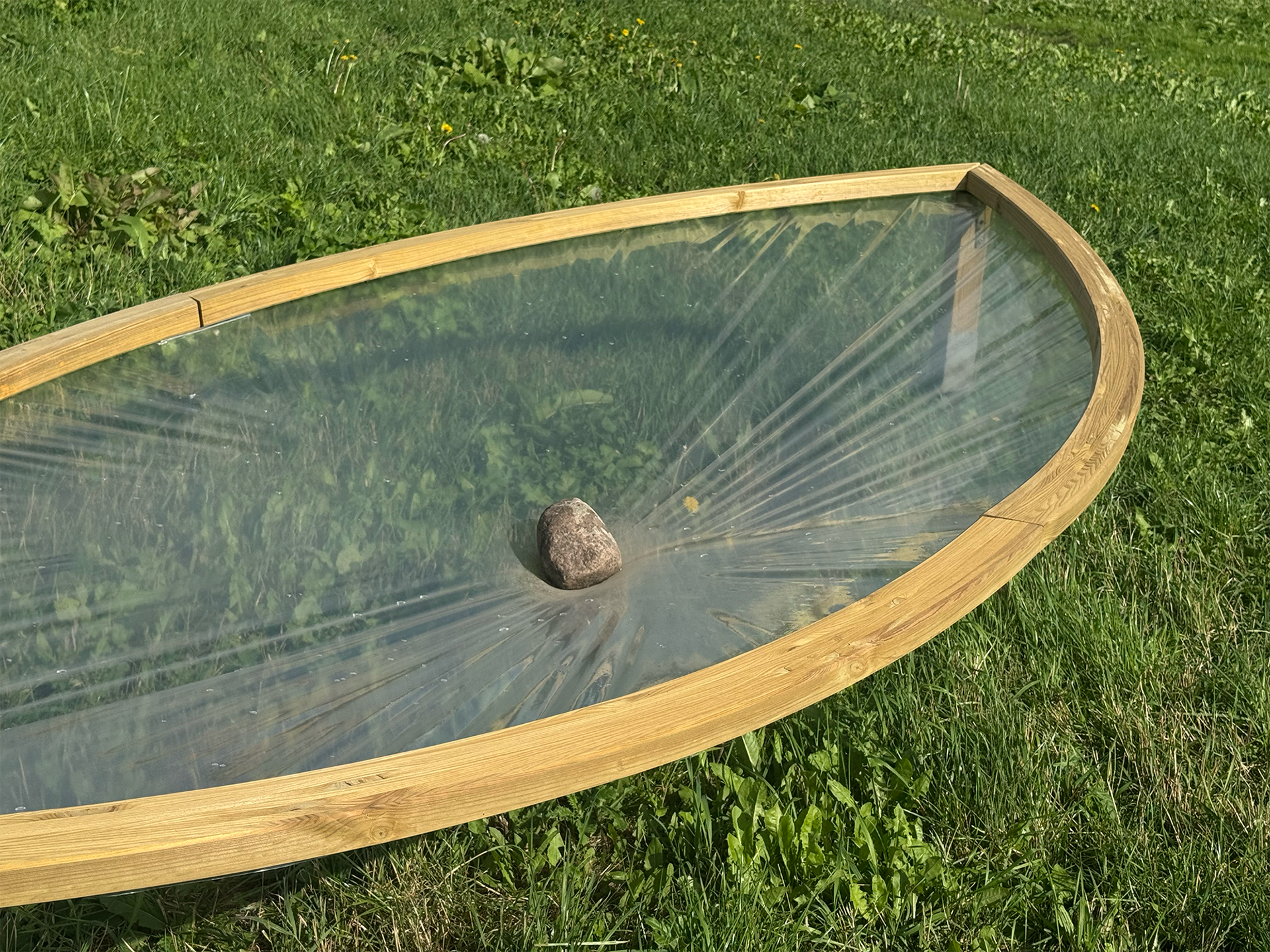
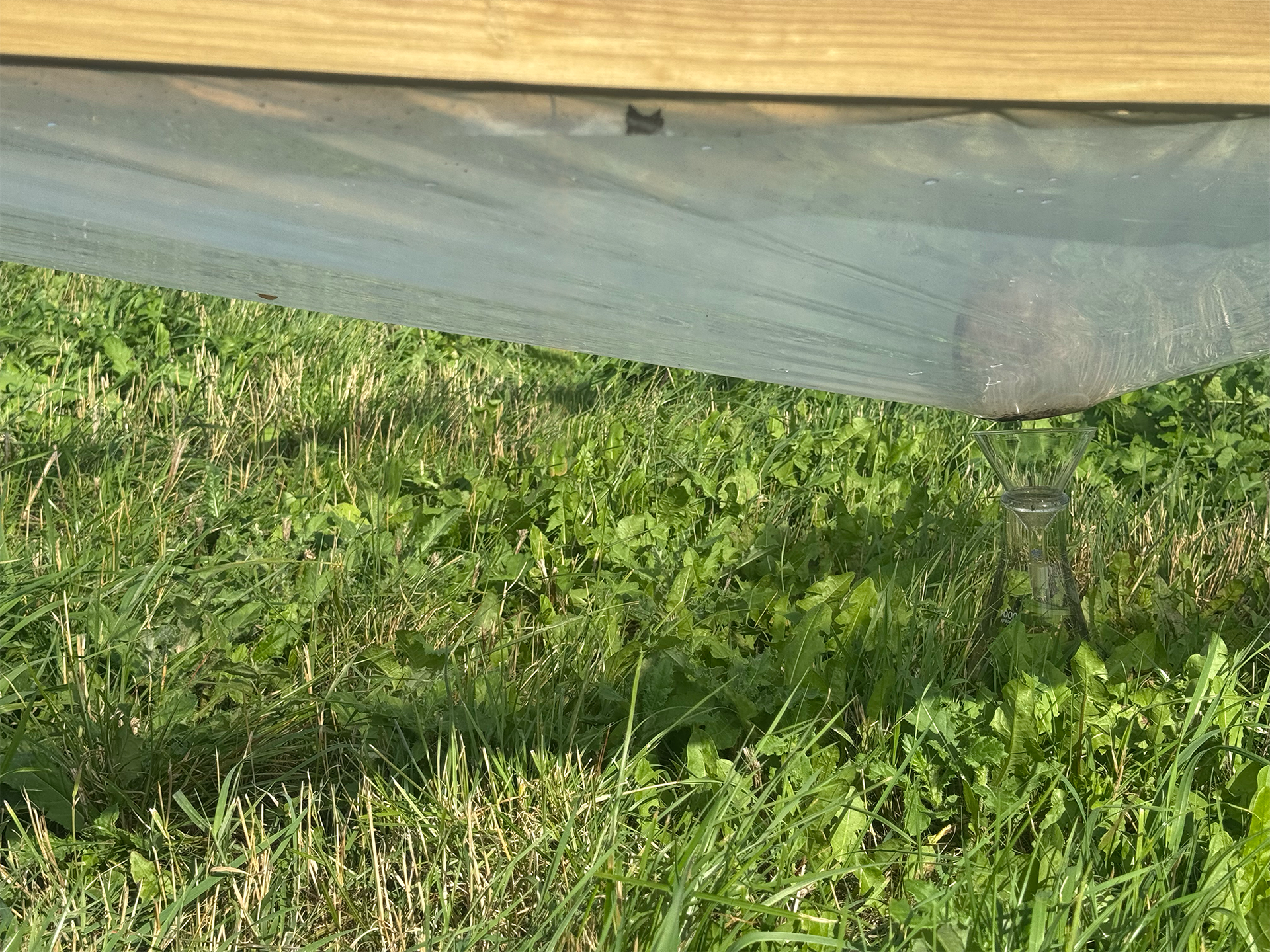
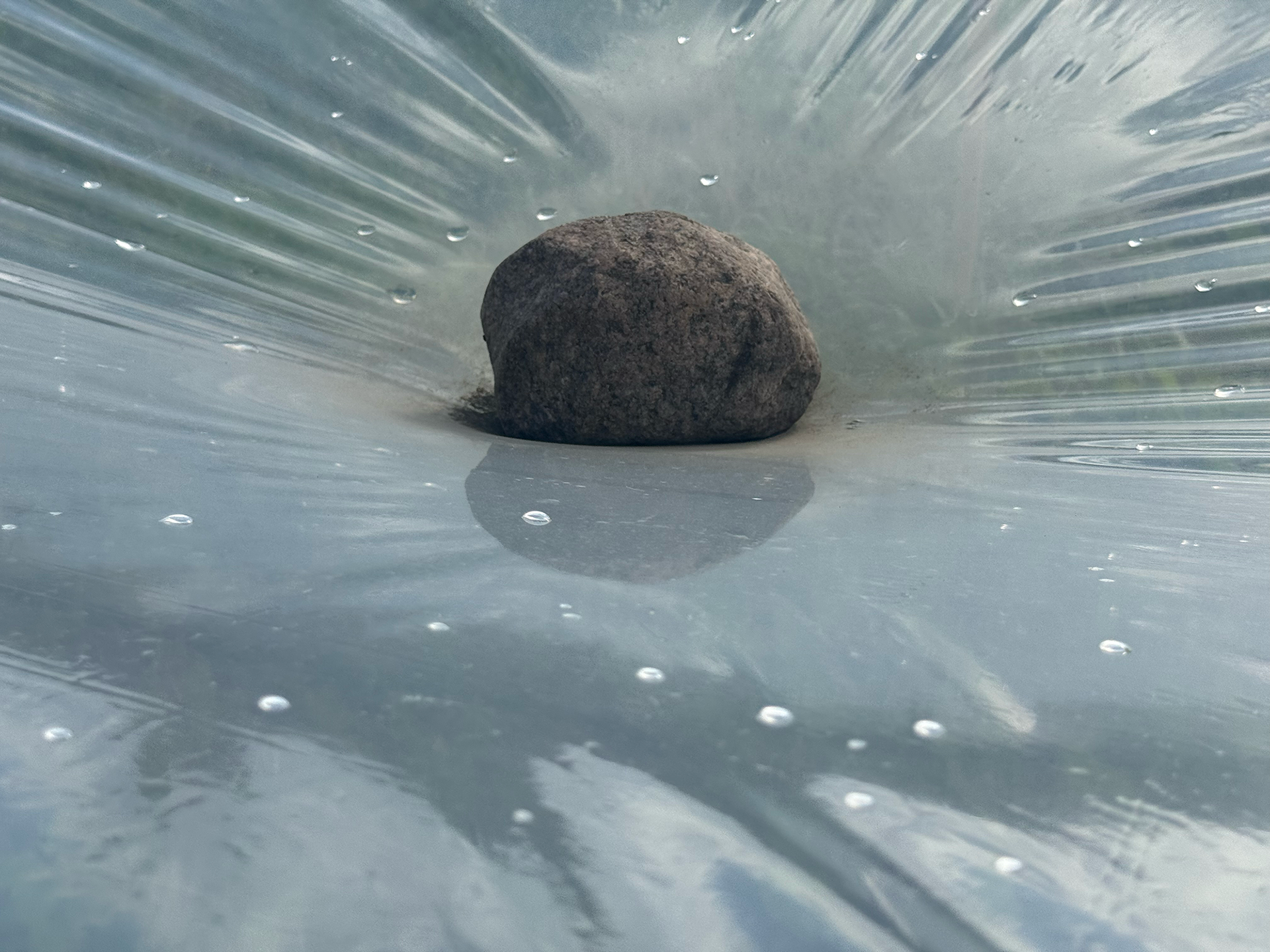
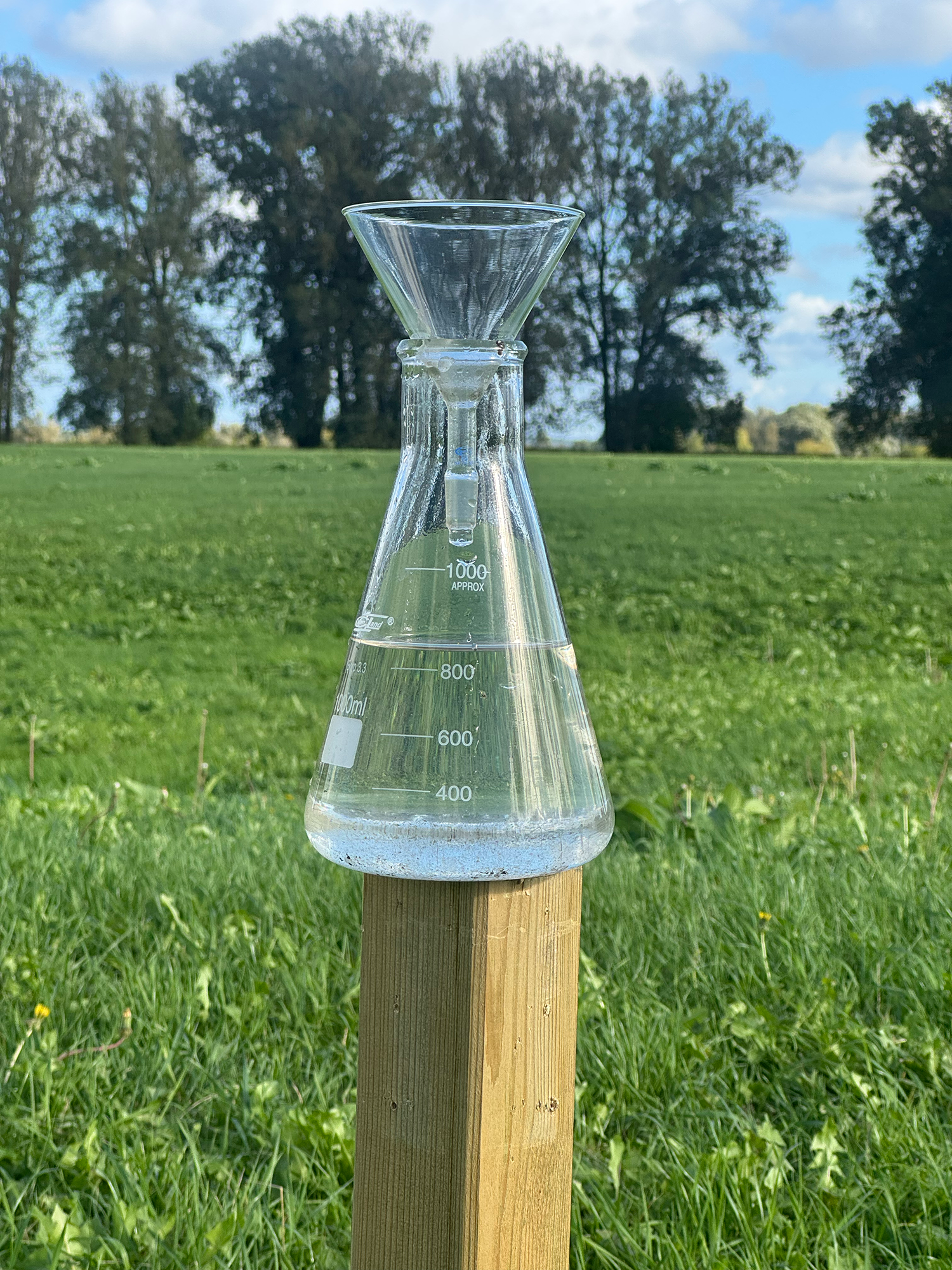
Mandorla, figura powstająca w miejscu przecięcia dwóch okręgów, wyznacza przestrzeń pomiędzy — obszar spotkania i przejścia. W pracy staje się formą dla procesu zachodzącego na granicy powietrza i wody, tego, co rozproszone, i tego, co zaczyna przyjmować materialną postać. W jej centrum znajduje się kamień znad Wisły. Obciążając folię, wyznacza najniższy punkt powierzchni i kieruje ku sobie skroploną wodę. Ta, przez znajdujący się pod kamieniem otwór i lejek, trafia do kolby, która pozwala rejestrować ilość wody zebraną w określonym miejscu i czasie.
Tytuł odnosi się zarówno do fizycznego progu kondensacji, jak i do momentu, w którym niewidoczna dotąd obecność staje się uchwytna. Efemeryczność tego procesu pozostaje jednak w napięciu z krytycznym wymiarem pracy. Punkt rosy kieruje uwagę ku wodzie jako zasobowi, którego dostępność nie jest bezwarunkowa, i ku możliwościom jej pozyskiwania poza logiką kolejnych odwiertów, ujęć i eksploatacji. Niewielka ilość wody gromadząca się w kolbie nie stanowi rozwiązania — jest raczej miarą, śladem i propozycją innego sposobu myślenia o tym, co już znajduje się wokół nas.
/EN
The Dew Point is a dew collector in the shape of a mandorla — an object functioning simultaneously as a sculpture, a tool, and a simple device for harvesting water from the atmosphere. It makes use of condensation: moisture suspended in the air settles on the cooling surface of the membrane and gradually turns into water.
The mandorla, a figure formed by the overlap of two circles, defines an in-between space — a zone of encounter and transition. In the work, it becomes a form for a process taking place at the threshold between air and water, between what is dispersed and what begins to assume material form. At its centre lies a stone collected from the Vistula River. By weighing down the membrane, it creates the lowest point of the surface and draws the condensed water towards it. From there, the water passes through an opening beneath the stone and a funnel into a flask, making it possible to record the amount of water collected in a particular place over a particular period of time.
The title refers both to the physical threshold at which condensation occurs and to the moment when a previously invisible presence becomes perceptible. The ephemeral nature of this process remains in tension with the work’s critical dimension. The Dew Point draws attention to water as a resource whose availability cannot be taken for granted, and to ways of obtaining it beyond the logic of ever-new wells, extraction points, and exploitation. The small amount of water accumulating in the flask is not presented as a solution — rather, it is a measure, a trace, and a proposition for another way of thinking about what is already present around us.
Link do wystawy: